Most AI writes one chapter
A chatbot fills the box in front of it, then forgets what it wrote. Great opening, no book.
Every other AI book writer hands you a chapter and quits. BookWriter plans the outline, drafts every chapter, and holds the characters, plot, and voice together to the last page. Don’t take our word for it — a national bestselling author let it finish an entire 104,000-word novel, and you can read every page free.
First chapter free · $9.99 for the whole finished, KDP-ready book · no subscription.
A chatbot fills the box in front of it, then forgets what it wrote. Great opening, no book.
Re-prompt, re-paste, reconcile the contradictions. Most “AI books” quietly die around chapter four.
Outline, continuity, voice, and a real last page — the stitching is the product, not your homework.
Who’s behind the engine
Author, publisher, and the solo developer behind BookWriter
David Weaver wrote his first book, Bankroll Squad, in 2008 — one of the first independent African American urban-fiction titles to do real numbers on Amazon, selling more than 30,000 copies in a single month at its peak. From 2012 to 2017 his publishing house, We Are The Majors, put out thousands of books by hundreds of authors and helped generate millions in sales. BookWriter is that catalog of hard-won publishing judgment turned into software — built solo, deleted once at the two-month mark, and rebuilt from scratch to do one thing the rest of the field doesn’t: finish the book.
Read the founder’s storySince 2008
Publishing & bestseller track record
Thousands
Of books published through his house
Millions
In author sales generated
Same goal, two completely different machines. Here is the actual path from idea to finished pages on each side.
Brain-dump the idea
Tell it the story in plain words — no outline or craft experience needed.
Answer a short questionnaire
It turns your notes into characters, stakes, and a book bible it will hold to.
Approve the outline
You lock a chapter-by-chapter plan before a single sentence is drafted.
Finish in Background
It drafts every chapter against the bible, checking continuity and voice as it goes.
Polish and export
Targeted passes for pacing and dialogue, then a clean, KDP-ready manuscript.
Prompt a chapter
You ask a chatbot for chapter one and paste the result somewhere.
Prompt the next one
It has already forgotten chapter one — names, timeline, and voice start drifting.
Fix the contradictions
You become the continuity editor, reconciling what the model forgot.
Re-prompt, re-paste, repeat
Every chapter is a fresh negotiation with a model that has no memory of the book.
Stall around chapter four
The seams pile up faster than you can patch them, and the book quietly dies.
The receipts
BookWriter isn’t a vibe. Every chapter is scored on a fixed editorial rubric — premise control, character pressure, pacing, continuity, dialogue — and the run is published with its score trajectory in the open.
75,000+
words of architecture, fine-tuning, and narrative physics behind every chapter
20 ch / 75k
words drafted and scored in the documented case-study run
Beats 4.7★
human bestsellers with 5,000+ reviews score lower on our internal rubric
Real-time slop detectors, pacing constraints, and thematic safeguards are baked into the engine — the clichés most AI writing produces are caught before they reach the page.
Read the full case studyThe real problem
The hard part of a book isn’t the first chapter. It’s the other thirty-three.
Type “ai book writer” into any tool and you’ll get a chapter. Sometimes a good one. Then you ask for chapter two and the machine has already forgotten the first — the protagonist’s sister changes names, the timeline bends, the voice flattens into the same beige cadence. That’s not a flaw in your prompt. It’s the shape of the tool. A chatbot is built to fill the box in front of it, not to hold a hundred thousand words in its head.
A book is a feat of memory. Characters have to stay themselves for three hundred pages. A clue planted in chapter two has to pay off in chapter thirty. The middle has to keep its tension when the novelty of the premise has worn off. None of that is solved by a better paragraph generator — it’s solved by a system that remembers, checks, and runs to the end.
That is the entire reason BookWriter exists. It is not a faster way to generate chapters you then have to stitch together. It’s the machine that does the stitching — and the planning, and the continuity, and the finishing — so the thing you end up with is an actual book.
How it holds a whole book
A book bible, a voice ledger, and a continuity pass on every chapter.
Before it writes a word of prose, BookWriter builds a book bible from your idea — the cast, the world, the rules, the arc. Every chapter is drafted against that bible, so the story it tells in chapter thirty is the same story it started in chapter one. This is the difference between a model guessing and a system remembering.
A voice ledger keeps each character sounding like themselves — the way they speak, what they’d never say, the rhythm that makes them recognizable across the whole manuscript. A consistency pass checks each new chapter against everything that came before it, catching the dropped threads and quiet contradictions that sink most long AI drafts.
And real-time slop detectors sit on top of all of it, catching the clichés and filler that AI writing is infamous for before they ever reach your page. The result isn’t “AI text.” It’s a manuscript that reads like one writer wrote it on their best month.
What you actually get
First chapter free. $9.99 for the whole finished book. You own every word.
You don’t pay to find out whether it works. Start free, brain-dump your idea, approve the outline, and read your first polished chapter before you spend anything. If it’s not the book you wanted, you walk away having paid nothing.
When you’re ready for the whole thing, a finished, KDP-ready manuscript — up to 70,000+ polished words — is $9.99. Not a subscription that bills you forever whether you publish or not. One price, one finished book, and the words are yours to publish, sell, and keep.
You are responsible for telling Amazon how the book was made, the same as any author using any tool — BookWriter gives you a clean manuscript and gets out of your way.
The proof, not the pitch
Most tools show you a clever demo. I’m a national bestselling author — confident enough to hand you a whole finished book and let you decide for yourself. 104,304 words. 34 chapters. BookWriter finished it on its own with standard Co-Writer — not even the Elite tier — from a brain dump, a questionnaire, and an approved outline. Read every page, then tell me AI can’t finish a book.
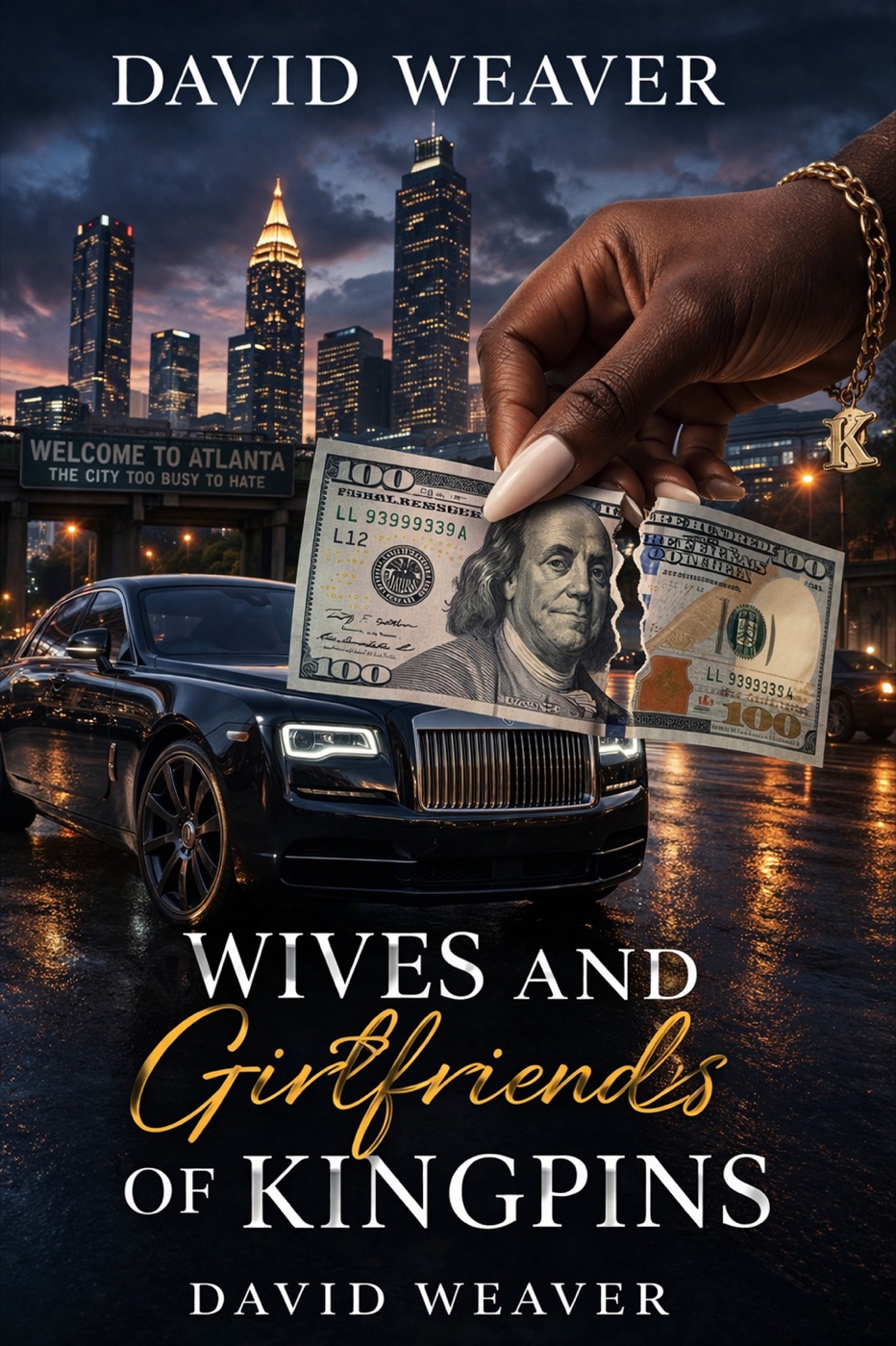
Cover designed on BookWriter
Author input, start to finish: Brain dump → Questionnaire → Outline approval → Autocomplete the whole book.
Photorealistic, cinematic book cover for an African American urban-fiction novel — 2:3 portrait, luxury-noir. Rain-slicked downtown Atlanta at dusk: storm-violet sky, a glowing skyline, the gold-lit Bank of America Plaza spire, and a "Welcome to Atlanta — The City Too Busy To Hate" sign. A blacked-out Rolls-Royce Wraith idles at the curb, headlights blazing across wet asphalt. Foreground: a Black woman's manicured hand — gold chain bracelet, diamond "K" charm — gripping a $100 bill torn clean in half. Deep shadows, gold-and-teal grade, neon reflections, sharp rim light. Clean negative space top and bottom for the title and author name.
BookWriter runs an MCP server, so the same finishing engine works right inside Claude, ChatGPT, or Cursor. You chat, it drafts, and every word you write is kept verbatim — chapter by chapter, to the last page.
Free, and yours to keep
There is a second way in that costs nothing: Steering Connect includes one persistent connected book, free. Drafting and previewing never spend the allowance — only the chapters you explicitly save count toward it. Plan your scope below to see which tier your book fits.
The included offer
1 persistent connected book
Up to 50,000 accepted words, with no BookWriter credit card. Drafting and previewing never spend the allowance — only an explicit save counts an accepted chapter toward it.
Refer 3, keep 100,000
When 3 different referred authors verify new accounts and start their own included Connect books, your original free book permanently expands to 100,000 accepted words.
Free planner
Estimate how many accepted words your book will run — and see which included or Connect tier it fits. Only words you choose to save count; drafting is free.
82,500 accepted words
Included free book, after referralsOver the base allowance, but within the 100,000 words you unlock by referring 3 authors.
Drafting and previewing never spend the allowance. A chapter counts only when you explicitly save it, so you can experiment freely and the meter reflects the book you actually keep.
You can start a free connected book in BookWriter today. The ChatGPT app that adds the assistant layer is a Product preview via a private developer-mode connection, not through the public Plugin Directory.
Connect BookWriter to ChatGPT through a private developer-mode app: in ChatGPT on the web, open Settings → Apps → Advanced Settings and enable Developer mode. Then open Apps, choose Create, paste the BookWriter MCP server URL, authorize with your BookWriter account, and scan the tools. Full connected write actions currently require an eligible ChatGPT Business, Enterprise, or Edu workspace.
See the current setup guide →One persistent connected book is included free. Draft as much as you like — only the chapters you save count toward the allowance.
No BookWriter credit card. Drafting and previewing never save prose.
Each page below answers one decision on its own evidence — software trade-offs, assistant behavior, or raw story generation — and every one is judged by the same bar: does the book get finished?
Yes — but most tools can’t, and that’s the confusion. A chatbot writes a chapter and forgets it. BookWriter drafts the whole book because it plans an outline, holds a book bible of characters and plot, and checks continuity on every chapter — all from your idea and your approved outline (AI-assisted, you’re the author). The proof is public: it drafted a 104,000-word, 34-chapter novel from a bestselling author’s brain dump and outline, and you can read every page free.
The honest test isn’t which tool writes the prettiest single paragraph — it’s which one actually finishes. General chatbots and sentence-level assistants are great at openings and terrible at endings, because they have no memory of the book. BookWriter is built specifically to finish: outline, draft, continuity, and polish across the entire manuscript.
You can start writing your book free — brain dump, outline, and your first polished chapter cost nothing and require no credit card. You only pay when you want the whole finished book: $9.99 for a complete, KDP-ready manuscript. There’s no subscription.
Those are writing partners you steer one prompt at a time — powerful, but you stay the project manager holding the whole book in your head. BookWriter is the project manager. It runs the outline-to-finished-manuscript pipeline for you, keeping continuity and voice consistent so you end up with a book, not a folder of disconnected chapters.
Yes. BookWriter runs an MCP server, so you can connect it to Claude, ChatGPT, or Cursor and write the whole book by chatting — the same outline, continuity, and finishing engine, right inside the assistant you already use. Your words are kept verbatim. See the guides for writing a book with MCP, in ChatGPT, with Claude, or in Cursor.
Yes. Every word it writes for you is yours to publish, sell, and keep. You are responsible for disclosing AI involvement to your publishing platform, the same as with any AI tool.
Once you’ve approved your outline, Finish in Background drafts the full manuscript on its own — you can close the tab and come back to finished chapters. Most authors go from idea to a complete first draft in a single sitting of setup plus background drafting time, not the months a blank page usually takes.
Brain-dump your idea, approve the outline, and read your first polished chapter free. Pay $9.99 only when you want the whole finished, KDP-ready manuscript.