Genre guide — Contemporary Romance

Write a Contemporary Romance with AI — Keep the Spark Alive

Modern romance breaks when the chemistry flattens, the friend-group world disappears, or the third-act break feels fake. BookWriter holds the banter, the emotional arc, and the setting details long enough to finish the book right.

60+ booksdrafted and shipped4M+ wordspolished through Final Edit$9.99per finished book70k+continuity across one manuscript

The short answer

Romance lives or dies on one thing: the emotional arc holding from the meet to the HEA. BookWriter tracks the relationship as a real structure across 70,000 words, so the chemistry doesn’t flatten by the midpoint.

Why it finishes

Brain-dump the couple and the trope, approve the beats, and Autocomplete drafts the whole book — banter, dark moment, reconciliation — in character the whole way. The free book below is relationship-driven proof it finishes.

What it costs

One finished romance is $9.99, up to ~70k polished words, with the heat level you set, a KDP-ready EPUB, cover, and audiobook in the stack. First chapter free.

Who’s behind the engine

David Weaver

Author, publisher, and the solo developer behind BookWriter

David Weaver wrote his first book, Bankroll Squad, in 2008 — one of the first independent African American urban-fiction titles to do real numbers on Amazon, selling more than 30,000 copies in a single month at its peak. From 2012 to 2017 his publishing house, We Are The Majors, put out thousands of books by hundreds of authors and helped generate millions in sales. BookWriter is that catalog of hard-won publishing judgment turned into software — built solo, deleted once at the two-month mark, and rebuilt from scratch to do one thing the rest of the field doesn’t: finish the book.

Read the founder’s story

Since 2008

Publishing & bestseller track record

Thousands

Of books published through his house

Millions

In author sales generated

Why romance is a finishing problem

Romance doesn’t fail at the meet-cute. It fails at the middle.

Anyone can write a charming first encounter. The book is won or lost in the forty chapters where the feeling has to keep building.

Romance is the biggest market in fiction and the one with the most punishing readers, because romance readers read deeply and read fast — they know the genre cold, and they can feel a fake beat from a mile away. The good news is that the opening is rarely the problem. Almost any AI can stage a charming meet-cute. The problem is everything after: sustaining attraction, distinct voices, and a believable emotional arc across a whole book.

That is a continuity problem dressed up as a craft problem. The chemistry flattens when the two leads start sounding like the same narrator. The world goes cold when the best friend, the ex, the group chat, and the job quietly vanish by the midpoint. The dark moment feels cheap when the breakup has no real external and emotional cause. Each of these is the model forgetting who these people are and what their relationship is made of.

BookWriter treats the relationship as a real structure, not a mood. The arc, the heat level, the dual POV, and the supporting world live in the Book Bible and are enforced on every chapter, so the banter stays character-specific and the warmth of the world keeps getting called back. The dark moment is built on a cause the book actually earned. The genre that punishes fakeness hardest is the one a continuity-first pipeline is built to serve.
Chemistry that survives the whole book

Two distinct voices, one rising arc, zero head-hopping

Two leads who sound like the same person is the fastest way to kill a romance. The bible keeps them apart.

The technical heart of a romance is voice and structure. The flirtatious lead has to keep sounding flirtatious; the guarded one has to keep sounding guarded; and in dual POV, each chapter has to stay in its lead’s head without head-hopping mid-scene. Generic AI collapses all of that into one narrator with quotation marks, and the chemistry dies the moment the two voices blur together.

BookWriter holds each lead’s voice in a voice ledger and declares POV at the chapter level, so the drafting pipeline keeps them distinct and the critique pass catches head-hopping before it ships. The relationship arc is tracked as its own through-line — vulnerability, the moment the future looks possible, the dark moment, the reconciliation — so the emotional temperature keeps rising on purpose instead of plateauing because the model lost the thread.

Heat level is part of that discipline, not an afterthought. Closed door, open door, or explicit is declared up front and held consistently, so the book stays the kind of book you set out to write. The result is what romance readers actually pay for: two people who feel real, a tension that keeps tightening, and a payoff that lands the exact promise the first chapter made.

The thing that finishes it

Autocomplete writes the whole love story while you’re away

Romance authors win on volume and read-through. The bottleneck was never ideas — it was finishing the next book.

Romance is a velocity genre. The authors who win publish often and build a backlist readers binge, and read-through is the whole economy. The bottleneck is almost never ideas — it is getting the next book finished while the last one is still selling. BookWriter’s answer is Finish in Background: brain-dump the couple and the trope, answer the questionnaire, approve the beats, and Autocomplete drafts the entire book unattended, in character, start to finish.

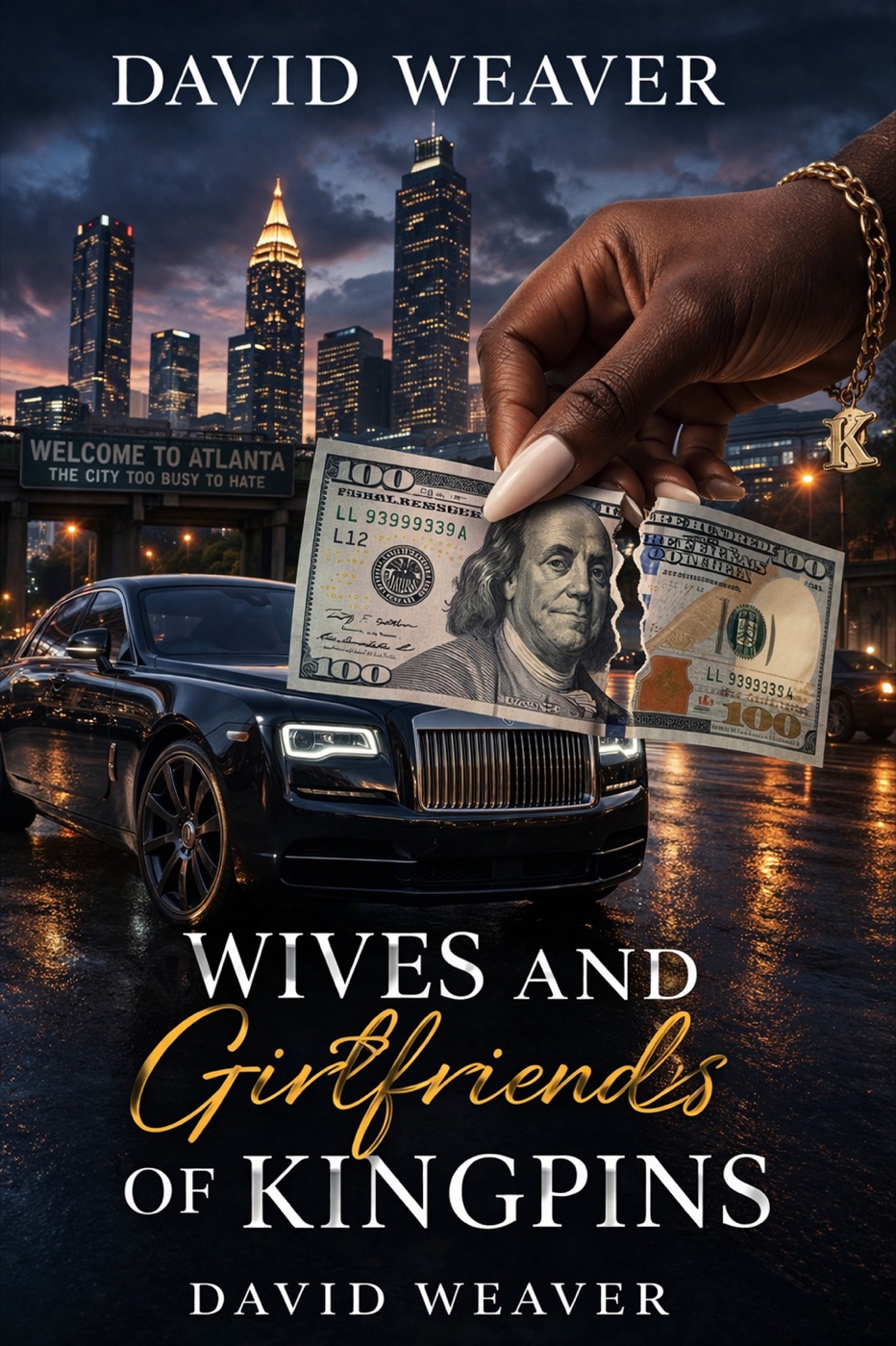
And we made the proof free to read. Wives and Girlfriends of Kingpins is a 104,000-word, 34-chapter relationship-driven novel BookWriter finished exactly this way — on standard Co-Writer, not Co-Writer Elite — from a brain dump, a questionnaire, and an approved outline. If you write the kind of book that lives on characters, voice, and entangled relationships, that is the most relevant proof there is: open it below and read a full-length, character-first manuscript the background finisher produced end to end.

Because romance runs in interconnected standalones — the best friend gets the next book — the work compounds. The cast, the setting, and the unresolved side threads you build here are already structured for the next title. You are not just finishing a novel. You are building a series readers can binge, which is exactly how romance careers are made.

What it costs to finish

A finished romance for $9.99, not a subscription between releases

In a backlist genre, the question isn’t the monthly fee. It’s how cheaply you can finish the next book.

Romance rewards a backlist, and a backlist means finishing book after book. Most AI tools that can help are subscriptions, which is a strange fit for an author whose output is bursty — you’re paying every month, including the months between releases, and the per-book cost climbs with every project that drags. The pricing model fights the way romance careers actually work.

BookWriter is priced around the finished book, which is the unit that matters in this genre. Your first chapter is free. One complete romance is $9.99 — a flat credit, up to roughly 70,000 polished words, with the relationship bible, the voice ledger, Autocomplete, the whole-book Final Edit, and a KDP-ready EPUB included, plus a cover and audiobook from their own pools. Finish a book, pay for a book; nothing accrues between releases.

So for a romance author the honest comparison is simple: which tool lets you finish the most good books for the least friction and the most predictable cost? A flat per-book price on a pipeline built to hold an emotional arc across a whole manuscript is, for a backlist genre, the model that actually fits — and at $9.99 a book, the next one in the series is never the expensive decision.

The proof, not the pitch

I gave away an entire novel to settle the argument.

Most tools show you a clever demo. I’m a national bestselling author — confident enough to hand you a whole finished book and let you decide for yourself. 104,304 words. 34 chapters. BookWriter finished it on its own with standard Co-Writer — not even the Elite tier — from a brain dump, a questionnaire, and an approved outline. Read every page, then tell me AI can’t finish a book.

Wives and Girlfriends of Kingpins by David Weaver — a novel finished with BookWriter

Cover designed on BookWriter

104,304
words
34
chapters
$0
to read it
Built with Co-Writer (standard Co-Writer — not Co-Writer Elite)Finish in Background / Autocomplete

Author input, start to finish: Brain dump → Questionnaire → Outline approval → Autocomplete the whole book.

The cover was designed on BookWriter too — see the exact prompt

Photorealistic, cinematic book cover for an African American urban-fiction novel — 2:3 portrait, luxury-noir. Rain-slicked downtown Atlanta at dusk: storm-violet sky, a glowing skyline, the gold-lit Bank of America Plaza spire, and a "Welcome to Atlanta — The City Too Busy To Hate" sign. A blacked-out Rolls-Royce Wraith idles at the curb, headlights blazing across wet asphalt. Foreground: a Black woman's manicured hand — gold chain bracelet, diamond "K" charm — gripping a $100 bill torn clean in half. Deep shadows, gold-and-teal grade, neon reflections, sharp rim light. Clean negative space top and bottom for the title and author name.

Read Wives and Girlfriends of Kingpins free
David WeaverNational bestselling author & publisherSee how it was made

The receipts

We graded the output against the same bar as human bestsellers

BookWriter isn’t a vibe. Every chapter is scored on a fixed editorial rubric — premise control, character pressure, pacing, continuity, dialogue — and the run is published with its score trajectory in the open.

75,000+

words of architecture, fine-tuning, and narrative physics behind every chapter

20 ch / 75k

words drafted and scored in the documented case-study run

Beats 4.7★

human bestsellers with 5,000+ reviews score lower on our internal rubric

The repeatable workflow

  1. Brain-dump the story in plain words — no outline or craft experience required.
  2. Convert the dump into structured chapter briefs with explicit stakes and cliffhangers.
  3. Lock an approved outline before a single sentence of prose is drafted.
  4. Draft each chapter against the bible, then score it on the fixed rubric.
  5. Run targeted passes — continuity, then dialogue tightening, then pacing.
  6. Re-score and keep only the changes that show a measurable gain.

Guardrails

Real-time slop detectors, pacing constraints, and thematic safeguards are baked into the engine — the clichés most AI writing produces are caught before they reach the page.

Read the full case study

Why most AI drafts stall on your contemporary romance

Chemistry that turns into generic flirting

Most AI can stage a cute first encounter but cannot sustain attraction, tension, and distinct voice over a full manuscript. BookWriter tracks the relationship arc as a real structure, not a mood.

Modern-life details that drift or vanish

The apartment, the coffee shop, the best friend, the ex, the group chat, the work schedule — all the details that make contemporary romance feel lived-in usually disappear by the midpoint. BookWriter stores them in the bible and keeps calling them back.

A breakup that feels manufactured

Readers will forgive pain. They will not forgive nonsense. BookWriter helps you build an external and emotional reason for the dark moment so the separation feels earned instead of lazy.

How BookWriter writes your full-length contemporary romance

Every chapter moves through the same five-step pipeline. No improvisation, no hand-waving around continuity. The bible is the source of truth from page one to the last line.

  1. Step 1

    Book Bible

    You describe the book you want — premise, tone, characters, tropes, ending — and BookWriter builds a persistent bible that every downstream step reads from. This is how continuity survives across 70,000+ words instead of drifting after chapter three.

  2. Step 2

    Pitch

    Every chapter starts with a pitch: what turns in this chapter, what the reader should feel on the last line, which threads advance, which seeds get planted. The pitch is judged against the bible before a single sentence of prose is drafted.

  3. Step 3

    Draft

    Chapter prose is drafted against the approved pitch with your voice targets, the voice ledger, and the full cast sheet in context. Names, ages, locations, and prior events carry forward automatically.

  4. Step 4

    Critique + Consistency

    Every draft is run through a critique pass and a consistency pass. The critique improves the prose. The consistency check looks backward across the whole book and flags anything that contradicts what has already been written.

  5. Step 5

    Polish + Final Edit

    When the draft is complete, Final Edit scans the entire manuscript as one document, removes duplicate scenes, repairs continuity breaks, and smooths transitions. It is not a line editor — it fixes real mistakes.

What makes it actually good for contemporary romance

Banter that stays character-specific

The flirtatious one sounds flirtatious. The guarded one sounds guarded. Dialogue does not collapse into one generic narrator with quotation marks.

Friend-group and family continuity

Contemporary romance often lives on recurring side characters and social worlds. The bible keeps track of those supporting relationships so the world keeps feeling warm and connected.

Dual POV discipline

If you want both leads on the page, BookWriter keeps the chapter POV clear and preserves each lead’s emotional logic instead of head-hopping inside the same scene.

Series-ready for interconnected standalones

When one best friend needs the next book, the cast, setting, and unresolved side threads are already structured for the sequel pipeline.

The beats your contemporary romance will hit

These are the beats a strong contemporary romance tends to hit. BookWriter proposes them, you approve or rewrite them, and the pipeline enforces them through drafting and Final Edit.

  • 1Opening collision that reveals attraction and incompatibility at the same time
  • 2Early banter scenes that establish tone without stalling the story
  • 3A personal vulnerability that changes the emotional stakes of the relationship
  • 4Mid-book moment where the future briefly looks possible
  • 5Outside pressure or old damage forces the dark moment
  • 6Reconciliation that costs the leads honesty, action, or humility
  • 7HEA or HFN that pays off the exact emotional promise the first chapter made

Frequently asked questions

Start with free tools

Use the narrow job pages before you move into the full contemporary romance workflow

These pages are the cleanest entry points for authors who are still shaping the project — quick, focused tools to use before you commit to the full contemporary romance workflow.

Start writing your contemporary romance free

Draft your first chapter free — see your contemporary romance take shape before you decide whether to keep going.